Bishop's Castle: Space, Pace & Thought
We met in a car park, drove an interesting variety of cars on twisty roads, stopped for coffee and cake, and had nice meals in the pub of an evening. Tim Robinson found food for thought even before he reached Bishop's Castle.
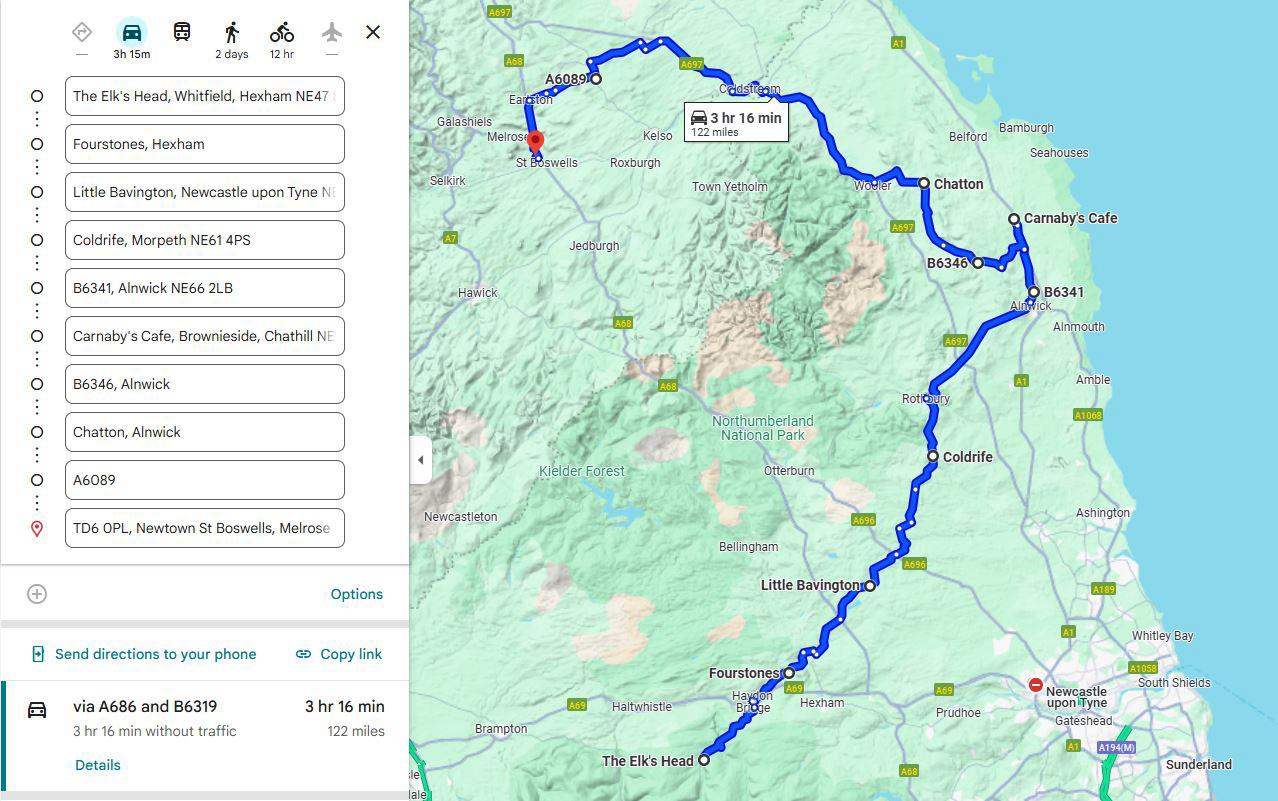
If a turn-by-turn travelogue is your thing, I'm afraid this article may disappoint you, as my perspective could only ever cover a very few of the total number of drives shared, and my literary ability could never adequately describe the details and nuances even of those. However, for the benefit of those of a narrative persuasion, I will at least begin with a personal horror story...
In January of last year, I was fortunate enough to add a Peugeot 208 GTi "commuting car" to my "fleet", which until then comprised only my beloved 987.2 Cayman. Though the purpose of the Peugeot was to preserve the Porsche for posterity, occasionally, if I knew I would not be able to accommodate the Cayman's weekly leisure drive on a Saturday or Sunday, I would exercise it on a trip to the office during the week.
On the morning in question, it took more than the usual two or three turns of the crank for the flat six to fire. I noted it, but thought little more of it until home time that night, when it took even longer for ignition to occur and, once it finally did, it was a spluttering, rough idle accompanied by the ominous red backlight to the dashboard's information screen, a "check engine" light, and a message warning of "Reduced Engine Power".
My accommodating local specialist booked the car in promptly and diagnosed a faulty high-pressure fuel pump, which was replaced and ready for me to collect on the morning of the Thursday, when the Bishop's Castle event begins. I would still have plenty of time to go home, give the car a wash, and then enjoy a leisurely drive south from Liverpool, with time to stop for lunch en route.
There was not a cloud on the metaphorical horizon... except the battery was flat again! Now I had a dilemma, and a problem. The dilemma was, even if I could get this battery charged up again, did I think it would survive an HPC weekend, even with – if I was lucky – overnight trickle charging, without getting me or other members stranded at some point?
So should I persevere with trying to take the freshly-washed "drivers' car" with its any-driver insurance, or should I bail out now and take the Peugeot? The problem was that, even if I chose the latter, I'd parked the Cayman so that the 208 was trapped on the drive. I had to get it started one way or another.
By this point, my entire contingency period had been eaten up and my ETA at my accommodation, where I had to check in before joining the event proper, was the same time I was meant to be arriving at the famous Bishop's Castle Cattle Market rendezvous point. In effect, I was now about fifteen minutes behind schedule, and I abhor being late.
This is where the story can take on some relevance for other HPC members. Though I confess I don't know the name of the primogenitor of this thought, I have heard it said that an HPC Gold driver should have "cleared the bar" by a sufficient margin that they ought still to be able to deliver a drive beyond reasonable reproach having arrived on a delayed red-eye flight into a foreign airport, been shafted by the hire car company, and set off into a wet and miserable night towards somewhere they don't particularly want to go.
I did not have anything like those obstacles to overcome but, to say it without quite so much hyperbole, I now had acute time pressure, in addition to a fairly high base level of stress caused by the previous hour's faff, on top of a week or so of wondering whether or not the garage was about to bankrupt me.
Roadcraft rightly talks at length about "red mist" and how external factors should, as far as humanly possible, not be allowed to influence the drive. My trip to Bishop's Castle suddenly became a very real exercise in putting that into practice whilst getting there as quickly as I reasonably could.
This leads me on to the very relevant topic of pace. In my own experience, I don't think I've ever met a slow driver in the Club. Indeed, as a group, I think we pride ourselves on our ability to make good, safe progress, principally by virtue of good observation, anticipation, and planning. I have met some fast drivers. And some very fast drivers. For the most part though, progress is just as smooth and apparently effortless for all of them when they are driving at their chosen pace.
Something had occurred to me prior to Bishop's Castle though, and I thought this would be a good opportunity to test my theory. I cast my mind back over my own drives, and those I have shared with others, and I realised that it was not uncommon, even in an otherwise faultless drive, for there to be at least one moment of slight discomfort. I'm not talking about anything so egregious as to cause one to stamp on an imaginary brake pedal, but just a little, internal "Ooh!!"; a tiny increase in pulse; a minutely raised eyebrow; or a small intake of breath. A mild surprise.
I write this article a couple of days after a solo day out in the Yorkshire Dales. I was driving for five hours and 250 miles in total, and I was broadly happy with my performance. However, there was one crest which I topped and thought "Ooh! Bit fast". And isn't that always the way? It's always "a bit fast". Whatever the situation or the error, the problem always seems to be that one has arrived somewhere slightly quicker than one would have liked.
I should swiftly point out that the members with whom I had the pleasure of driving during the Bishop's Castle event did their utmost to disprove my hypothesis. I was fortunate to experience a very high standard of driving throughout the event, and it really was a pleasure to see such consistent excellence exhibited over all four days by every member.
So we arrive at the stablemate of pace: margin. Can we stop in the distance we can see to be clear? Yes. But how far will that leave us from the thing we're trying not to hit? And since an emergency stop is unplanned, to what extent does our margin allow for further problems, such as a patch of water, mud, or even ice on the bit of road that has now become our braking zone?
It was pointed out over dinner in Bishop's Castle that stopping in an emergency doesn't need to be pretty. The goal is to stop the car as quickly as possible, and that might not be a smooth or graceful experience! We should not be afraid to get on the brakes when they are needed.
To reduce my journey time by 15 minutes, I would have had to average 53mph which, on the route in question, I contend is not possible without the use of blue lights or a light aircraft, or both. Though I hadn't done the sums at the time, I was certainly aware that trying to chop that much off an ETA was an exercise in futility.
I still arrived in Bishop's Castle somewhat stressed and irritated, but before we were due to commence our evening's drive. This is where the tale can take a happier turn. With a little effort on my part, but mostly thanks to the enthralling conversation with, and captivating driving of, my co-driver, all thoughts of fuel pumps, batteries, caravans, and ruinous expense were quickly out of my mind, and they remained out all weekend.
The Club's values, which I personally endorse wholeheartedly, are that we're: Passionate about driving, Committed to self-improvement, and Fun-loving. To want to spend up to four days driving around in circles in the Welsh borders certainly suggests that all those present were passionate about driving.
The whole event was fun, and for keen drivers, that the daytime activities were fun stands to reason. But as "the informal formal event", it's in the evenings that one can revel in conversation, camaraderie, and, at times, incisive banter with other members in the pub, and that is invariably fun.
For those who have not been before: the Bishop's Castle event is effectively four dawn raids stuck together, and this is perhaps not a surprise, as it's convened by the king of dawn raids, Gareth Davies, to whom all the attendees owe a huge debt of gratitude for the event's superlative organisation. When I received my copy of the Road Book, I suggested to Gareth that it, with those for the previous events, ought to be professionally printed, bound, and preserved as an historical artefact.